Where Slate, Copper & Chimney Geometry Meet
The roof is the most difficult part of a heritage home. It is where slate, copper, stone and drainage logic intersect — and where 90% of failures come from when crews treat roofing like a commodity. Heritstone designs and builds the roof as a structural, engineered envelope.
- Slate laid with correct headlap, exposure, and water path logic.
- Copper valleys, ridges and edge metal shaped by drainage — not shortcuts.
- Chimneys integrated into the roof structure, not “flashed around.”
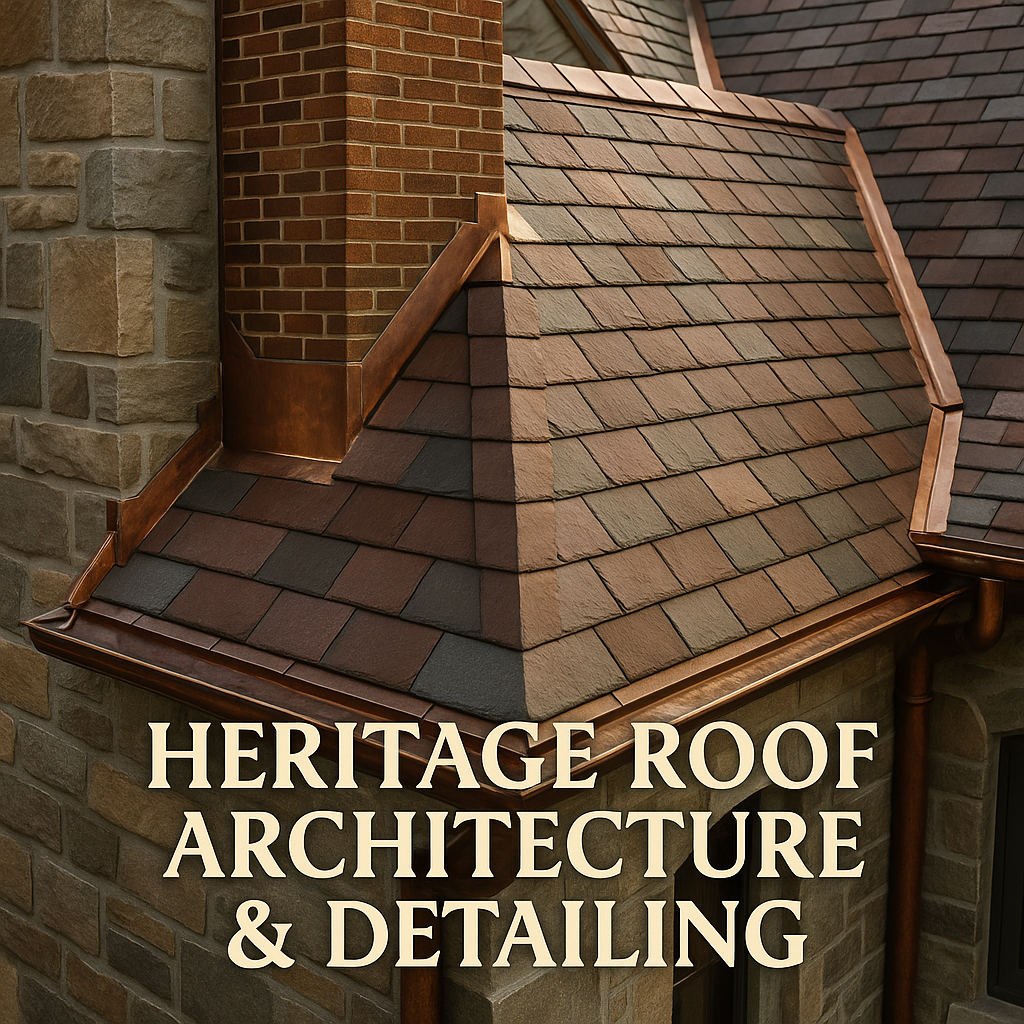
The Rules of Heritage Roof Work
A heritage roof is built around physics — slope, water, expansion, load and thermal movement. Everything rests on discipline, not sales material.
- Slate thickness and headlap selected for the roof’s geometry — not “whatever is on the truck.”
- Copper valleys formed as a water highway, not decorative insert.
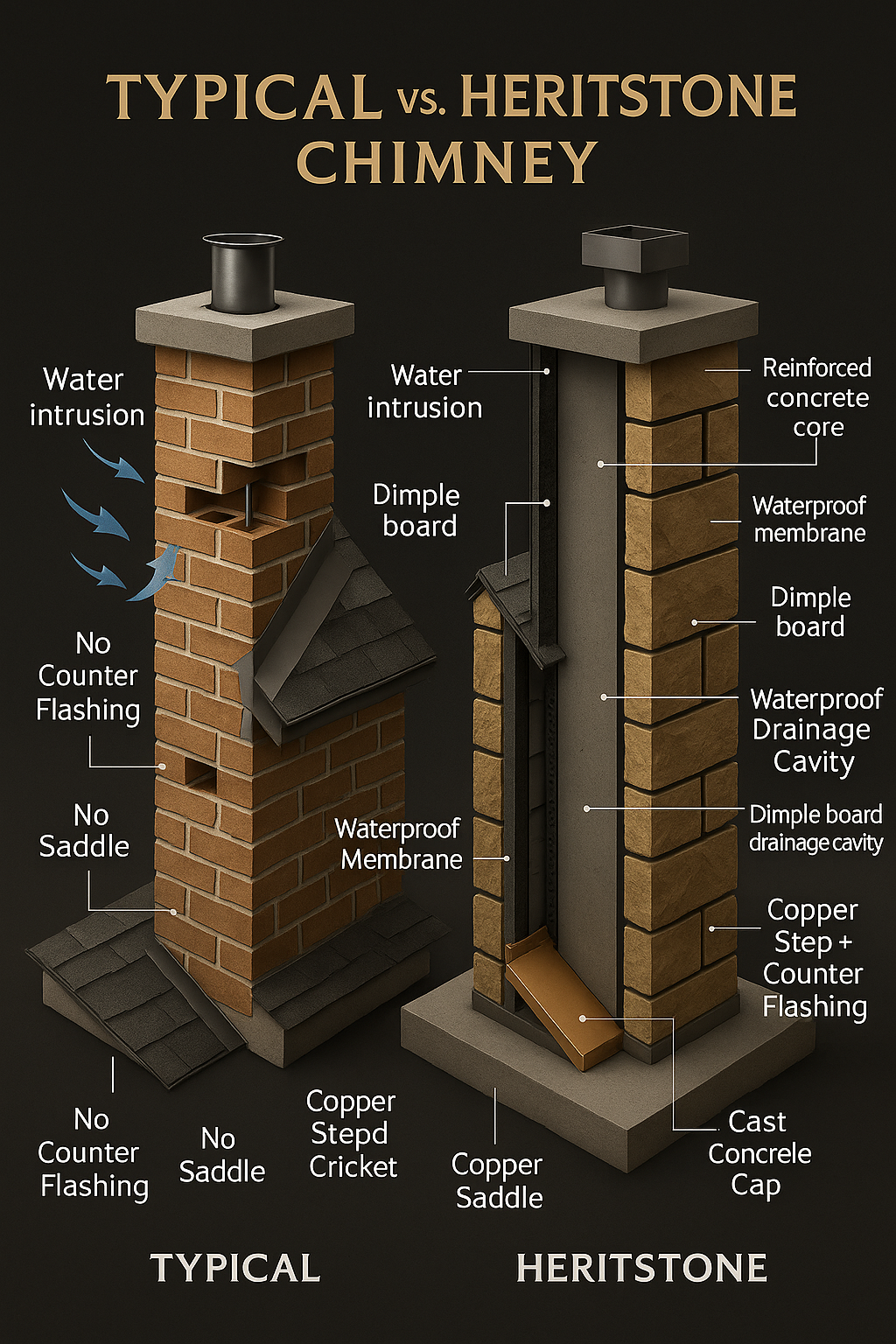
- Step flashing tied into masonry joints, not face caulked.
- Chimney crickets shaped for shedding, not appearances.
- Ridges and hips designed around slate expansion and copper aging.
- Everything sequenced as one assembly — stone, slate, copper and framing.
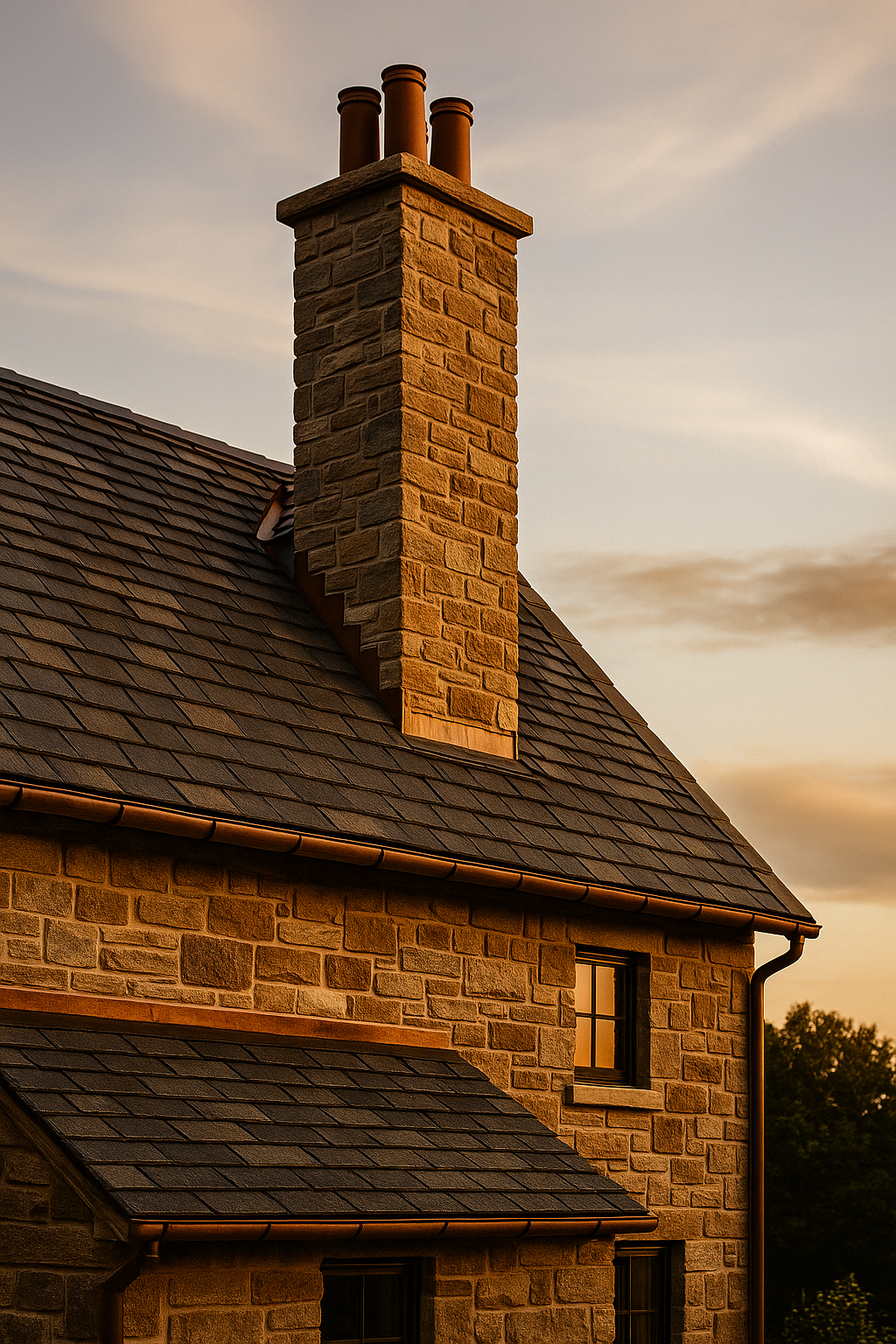
Slate Without Shortcuts
Slate is not nailed like shingles. It is hung, spaced, patterned and layered with intent. Every valley, hip and penetration is shaped around water — not speed.
Chimney Geometry & Copper Integration
Chimneys must be tied into the roof at the structural level. Failure happens when roofs are laid first and the chimney is “worked around.”
- Chimney saddle pitch calculated for proper drainage speed.
- Crickets built as miniature roofs — not filler triangles.
- Counterflashing cut into stone joints, not glued to the face.
- Open or closed copper valleys chosen based on roof plan and exposure.
- Slope transitions handled with pans, not caulked shortcuts.
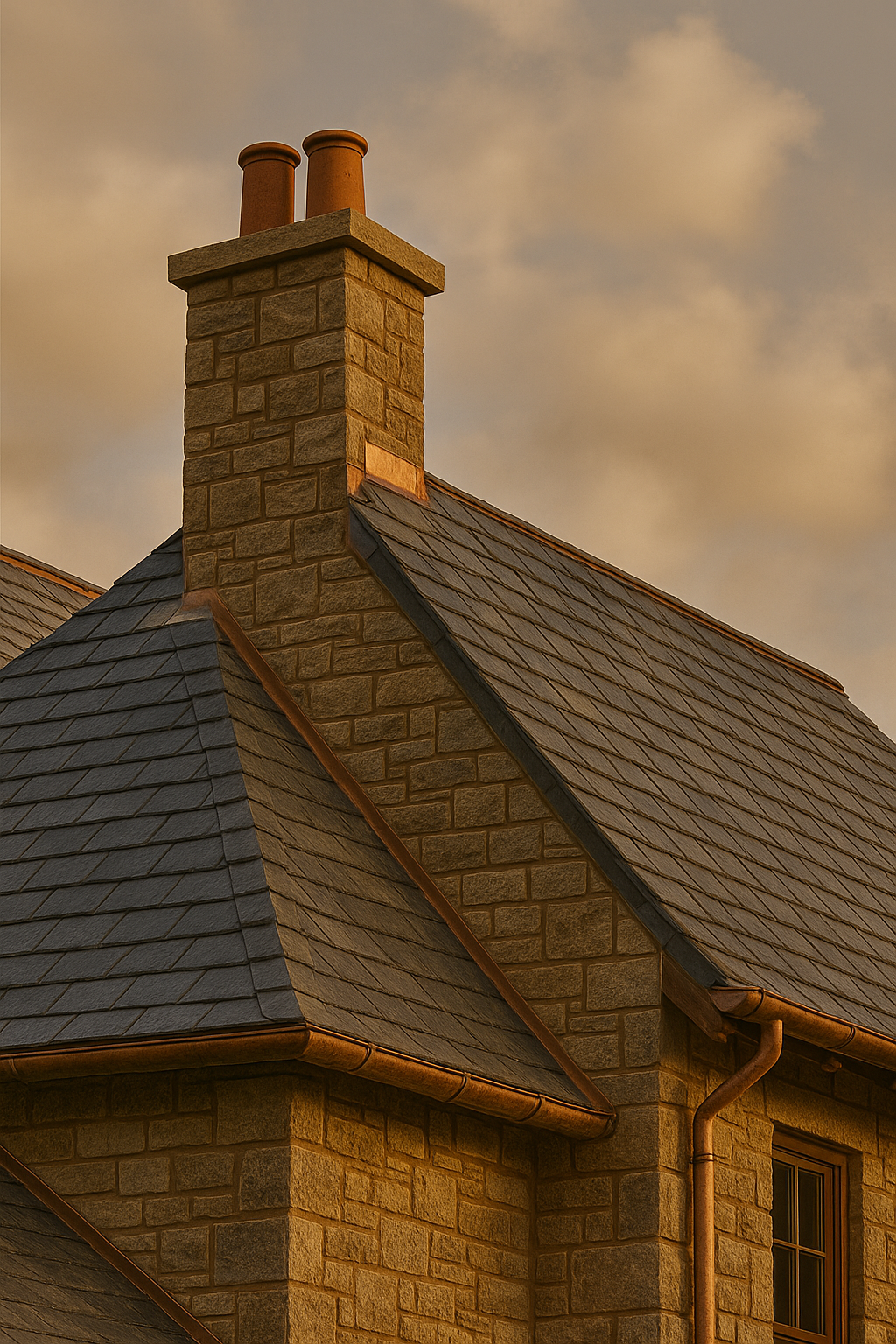
Water Movement Is Everything
Water does not care about “looks” — it follows geometry, speed and surface. The entire roof is designed like a map of water paths.
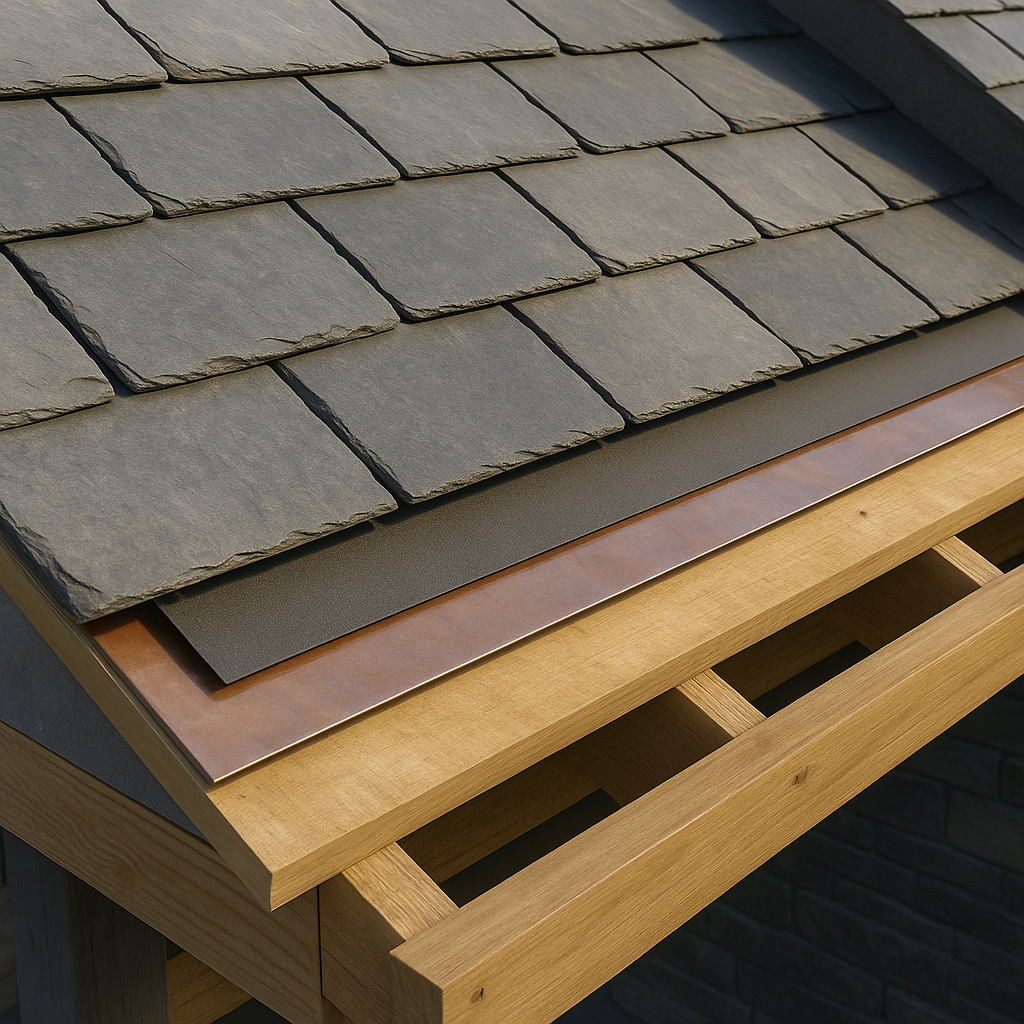
Discuss Heritage Roof Architecture
If your home was built for slate, copper and masonry — not shingle roofing — the roof needs to be designed as a heritage envelope. A site visit and review of your roof geometry will determine the proper approach.